The sticker price of a top university can be intimidating, but the true cost—the Net Price—is often much lower. The most financially generous schools use their massive endowments to meet nearly all of their admitted students' needs, making college more affordable than many state schools.
In this guide, we reveal the institutions that offer the best financial aid packages in 2026, explain the difference between the FAFSA and CSS Profile, and provide practical tips for maximizing your grants and scholarships.
Financial Aid Landscape 2026: Who Qualifies and How to Compare
100% Demonstrated Need and No-Loan Packages
Colleges that meet 100% of demonstrated need calculate the difference between the cost of attendance (COA) and your ability to pay (Student Aid Index, or SAI) and cover the gap entirely with aid. Roughly 70 elite schools, including all Ivy League members, make this commitment.
Even better are no-loan packages, which replace loans with grants. This means the student graduates debt-free.

No-Loan/Full Grant Packages at Elite Colleges
| College | 100% Need Met | No-Loan Policy for All? | Income Threshold Example (Free Tuition/Grant) |
|---|---|---|---|
| Princeton University | Yes | Yes (All students) | Families earning under $100,000 |
| Harvard University | Yes | Yes (Low-income) | Families earning under $75,000 typically pay nothing |
| Stanford University | Yes | Yes (Low-income) | Tuition free for families with incomes below $150,000 |
| MIT | Yes | Yes (Starting 2026) | Tuition free for families earning under $200,000 (starting 2026) |
Merit Aid and Generous Aid by School Type
While elite privates focus on need-based aid, many strong colleges use merit aid (based on GPA, test scores, activities) to attract top students regardless of their need. State schools often award merit aid to high-achieving out-of-state students to offset non-resident tuition costs.
Net Price Calculators: Reading and Comparing True Cost
The Net Price Calculator (NPC) is the most important tool for financial planning. It provides a personalized estimate of your actual cost. You should run the NPC for all colleges on your list to compare true cost, not just sticker price.
Federal Aid and Aid Applications for 2026–2027
FAFSA vs CSS Profile: What You Need to Know
You may need to file two different forms to unlock all available aid:
| Metric | FAFSA | CSS Profile |
|---|---|---|
| Purpose | Federal Aid (Grants, Loans, Work-Study) | Institutional Aid (Need-based grants/scholarships) |
| Required By | Nearly all U.S. colleges | ~400 Selective/Private Colleges |
| Cost | Free | Fee ($25 for first school, waivers available) |
| Financial Scope | Basic income and assets | Detailed assets (e.g., non-custodial parent, home equity) |
Deadlines and Submissions for 2026–2027
Both the FAFSA and the CSS Profile open on October 1st for the following academic year. It is critical to submit both as soon as possible, as institutional aid is often awarded on a first-come, first-served basis. Priority deadlines (ED/EA) are usually November 1st or 15th.
Grants, Scholarships, and Loan Basics
Grants and Scholarships are free money (non-repayable). Loans must be repaid, making them the most expensive part of your aid package in the long run. Always aim to maximize grants and scholarships to minimize loan burden.
Scholarships and External Funding in 2026
Top Scholarship Search Sites and AI Matching
External scholarships supplement your college's financial aid. Use advanced tools for this:
- Traditional Sites: BigFuture, Scholarships360.
- AI Matching: Tools (like Orbit AI) use predictive modeling to match you to niche, low-competition awards based on your full profile (e.g., last-minute scholarships).
Organizing Applications and Deadlines
Maintain a single, integrated calendar for both college application deadlines and scholarship deadlines. Missing a deadline for a scholarship is one of the most common mistakes students make.
Sample Yearly Calendar for Scholarships
- October – December: File FAFSA/CSS, apply for most generous institutional aid and Early Decision scholarships.
- January – March: Apply for national and general Regular Decision scholarships.
- April – August: Focus on local, niche, and rolling last-minute scholarships.
Reading and Comparing Aid Offers
How to Read an Aid Letter and Compare Net Prices
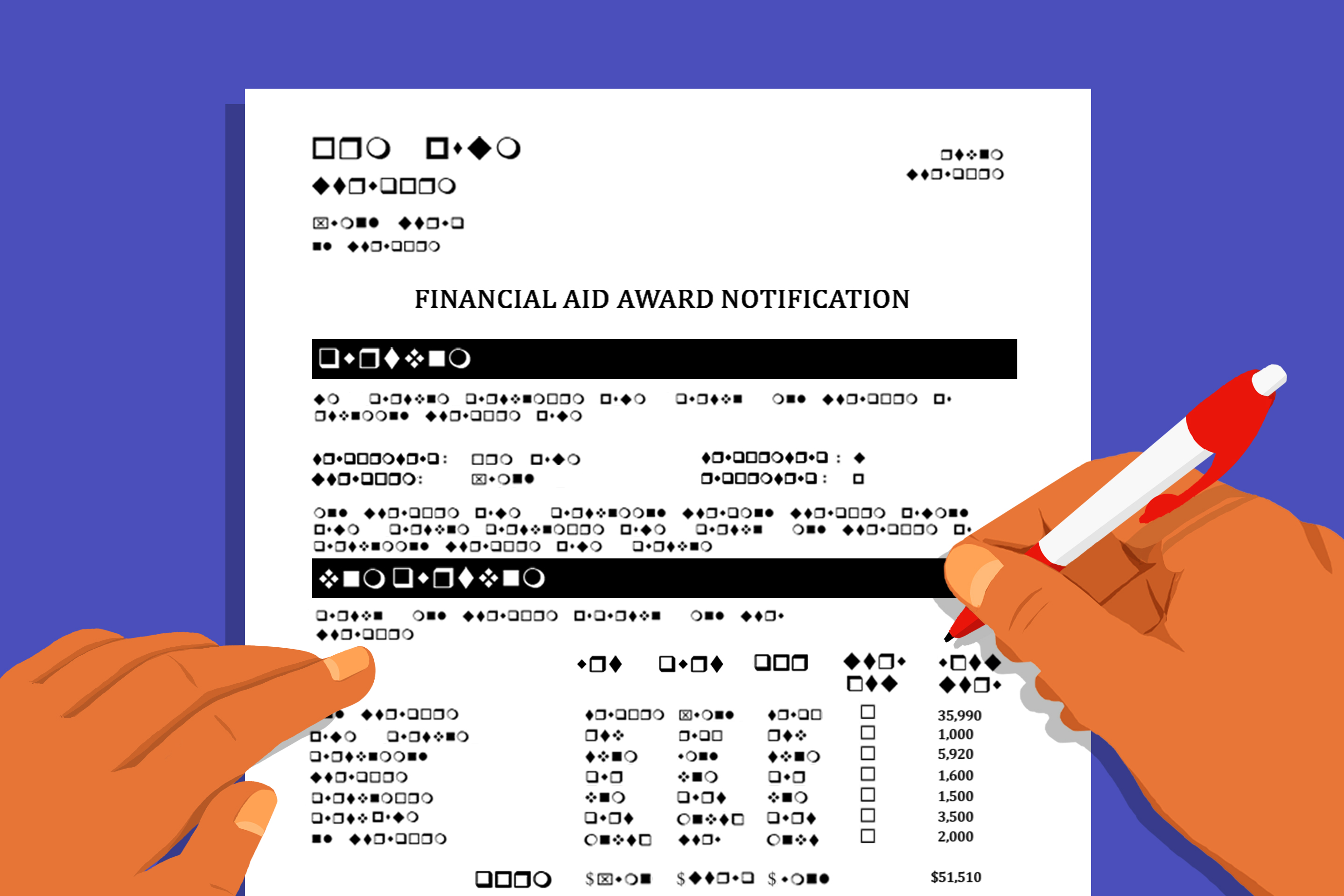
When comparing colleges, focus only on the Net Price (Cost of Attendance - Grants & Scholarships). Do not be fooled by a high "Total Aid Package" number that includes loans. The college with the lowest Net Price is the most affordable.
Loan Tradeoffs and Repayment Basics
Subsidized federal loans are generally better than unsubsidized or private loans, but all loans increase your long-term cost. Choose the option that leaves you with the lowest debt load.
Elite vs Public Flagships: Aid Landscape
No-Loan Packages at Elite Private Colleges
Private universities like Harvard, Princeton, and Stanford lead the way in affordability for low- and middle-income families, often providing full tuition coverage for families earning well into the six figures.
Public Flagships with Generous Aid for In-State/Out-of-State
Public flagships like UNC Chapel Hill and the UC system (especially UCLA) offer strong aid, but their generosity is usually weighted heavily toward in-state residents. Out-of-state students should understand that merit scholarships are key to mitigating high non-resident tuition.
Practical Steps and Quick Wins
Build an Aid Planning Calendar
Commit to filing your FAFSA and CSS Profile by the priority deadline (often November 1st). Use a digital calendar tool and set reminders for every school's specific requirements.
Use AI Tools for Searches and Applications
AI tools provide a significant advantage in finding niche scholarships and ensuring your FAFSA/CSS Profile data is optimized for maximum aid potential.
Data Sources and Credible References
Official Data Sources for 2026 Aid Figures
Always rely on data from the U.S. Department of Education (FAFSA), the College Board (CSS Profile), and the institution's official financial aid office.
How to Verify Aid Data
Use the college's Net Price Calculator to verify the data before you receive an official offer, and be ready to submit an aid appeal or negotiate if one college’s offer is significantly lower than a comparable school.
Frequently Asked Questions (FAQs)
1. Which colleges meet 100% of demonstrated financial need in 2026?
Over 70 highly selective institutions—including all Ivy League schools, MIT, Stanford, and elite liberal arts colleges—have a stated commitment to meeting 100% of a student's calculated financial need for domestic students.
2. How do no-loan packages work at elite private colleges in 2026?
No-loan packages replace the student loan portion of a financial aid award with grant money. This means the student graduates debt-free. Many top schools offer this for families below a specific income threshold (e.g., $65,000–$100,000).
3. What’s the difference between need-based and merit-based aid?
Need-based aid is determined by your family's financial situation (as measured by FAFSA/CSS Profile). Merit-based aid is awarded based on a student's achievements (GPA, test scores, extracurriculars) regardless of financial need.
4. How can I use net price calculators to compare true cost across schools?
The Net Price Calculator (NPC) provides an estimate of the cost you will actually pay (tuition minus grants/scholarships). This is the 'true cost' and is the most reliable way to compare affordability across institutions before you receive an official aid offer.
5. What FAFSA and CSS Profile deadlines should I know for 2026–2027?
Both applications open on October 1st. Priority deadlines for Early Decision/Action often fall on November 1st or 15th, while Regular Decision deadlines are typically January 1st to February 15th.
6. Which scholarship search sites are most effective in 2026?
AI-powered tools (like Orbit AI) are most effective because they offer personalized matching and real-time verification. Traditional sites like BigFuture offer high volume but often struggle with filtering and outdated listings.
7. Can AI tools help tailor scholarship recommendations to my profile?
Yes. AI tools analyze your essays, activities, and major to match you with niche awards you are most likely to win, optimizing your application strategy beyond simple GPA/income filters.
8. How should I read an aid offer letter to choose between colleges?
Focus on the 'Net Price' (Total Cost of Attendance minus Grants/Scholarships). Ignore work-study and loans initially, as they are not free money. The lowest Net Price represents the best financial deal.
9. Do public flagships offer generous aid for out-of-state students in 2026?
Public flagships are generally less generous to out-of-state students. Their primary focus is on in-state residents. Out-of-state students should focus heavily on maximizing merit-based scholarships.
10. What are the common FAFSA mistakes to avoid in 2026?
Common mistakes include missing the priority deadline, failing to use the IRS Data Retrieval Tool for accuracy, listing divorced parental information incorrectly, and not entering the college's correct federal school code.
11. How do loans affect your long-term cost after aid?
Loans, even federal subsidized ones, add to your debt burden and long-term cost. Grants and scholarships are always better, as they reduce the overall price tag without requiring repayment.
12. When is the best time to start applying for financial aid for the 2026–2027 year?
The optimal time is immediately after the FAFSA and CSS Profile open on October 1st, regardless of their final deadline. Early submission maximizes your chance of receiving institutional aid before funds are depleted.

About the Author: Sayak Moulic
SEO & Growth Strategist
Sayak builds content experiences at Orbit that help our students learn about college application and financial literacy. Connect with him on LinkedIn.

devanshdubey.nitd.cse@gmail.com
December 27, 2025
An experienced writer and researcher focused on college admissions, this author simplifies the complex journey of applying to universities. They create practical, student-friendly content on entrance exams, application strategies, essays, and admission planning. With a strong emphasis on clarity and real-world guidance, their work helps students and parents make informed decisions, avoid common mistakes, and confidently navigate competitive admissions processes to find the right academic fit.






.jpg)