For aspiring musicians, the choice between a Bachelor of Music (BM) and a Bachelor of Arts (BA) in Music is the most fundamental decision they face. This choice determines your academic life, the intensity of your practice, and the eventual shape of your career.
Simply put: the BM is a professional degree designed to train you for the stage or classroom; the BA is a liberal arts degree designed for broad intellectual exploration alongside music study. This guide provides a detailed comparison on curriculum, career paths, and cost.
Quick Comparison: BM vs BA in Music
| Criteria | Bachelor of Music (BM) | Bachelor of Arts (BA) in Music |
|---|---|---|
| Primary Goal | Professional training (Performance, Composition, Education). | Liberal Arts exploration; music as a primary subject. |
| Music Credit % | 65% to 80% (High intensity) | 30% to 40% (Moderate intensity) |
| Private Lessons/Practice | Mandatory, often 2+ hours daily. | Optional or limited. |
| Double Major | Extremely rare or impossible. | Highly encouraged and common. |
| Admission Process | University Application + Mandatory Audition/Portfolio. | Standard University Application (Audition optional). |
| Duration | Usually 4 years (sometimes 5). | Standard 4 years. |
BM vs BA in Music – Core Differences Explained
Definition and Core Focus of a Bachelor of Music (BM)
The Bachelor of Music is an intensive, professional degree usually housed within a conservatory or a specialized school of music. It is designed for students who know they want to dedicate their lives to music, either as performers, composers, scholars, or educators. Its core purpose is to develop exceptional technical skill.
Definition and Core Focus of a Bachelor of Arts (BA) in Music
The Bachelor of Arts in Music is offered within a university’s liberal arts college. It provides a foundational understanding of music theory, history, and performance, but allows ample time for studies in other fields (e.g., Business, Psychology, or Technology). It is perfect for those who want a flexible career or plan to pursue music alongside another industry.
Typical Coursework and Credit Distribution
- BM: Courses include advanced theory, composition, extensive history, private lessons, and mandatory ensemble participation, often totaling over 120 credits focused purely on music.
- BA: The curriculum balances music fundamentals with general education requirements (math, science, humanities), offering only 40–50 credits in the major.
Program Structure and Duration
While both are typically four years, the BM’s intensity—often requiring more credits per semester and summer work—means less flexibility for breaks. BA students have more freedom for summer internships or study abroad programs.
Admissions Requirements and Audition Processes
This is the greatest practical difference: BM programs require a successful audition—a highly competitive, primary factor that often outweighs GPA. BA programs typically review a standard academic profile, and the audition is often optional or advisory.
Portfolio vs. Academic Requirements
- BM: Emphasis on musical excellence (audition/composition portfolio) and commitment.
- BA: Emphasis on strong academic record (GPA, essays) and fit within the university's liberal arts mission.
Audition Preparation Tips
For BM programs, start preparing your repertoire 12–18 months in advance. Invest in quality private coaching and consider using an AI College Counselor (Solvi) to plan your timeline and practice schedule efficiently.

Career Paths and Employment Outcomes
BM Graduate Career Trajectories
BM graduates typically pursue performance careers (orchestras, opera companies, touring ensembles), composition, conducting, or teaching (K-12 certified music educators). Success often relies on exceptional skill and further graduate study (MM or DMA).
BA Graduate Career Trajectories
BA graduates often enter interdisciplinary fields leveraging both their music background and their second major/minor. Common paths include arts administration, music therapy, music business, sound engineering, music journalism, or non-arts fields entirely (e.g., using a double major in computer science for music software development).
Salary Expectations and Job Market Trends
While starting salaries for full-time professional performers can be volatile, graduates who pair a BA with a highly marketable skill (like finance or tech) often have higher initial compensation stability than pure BM performance majors. However, established BM graduates in orchestra principal chairs or tenured university positions command higher long-term salaries.
Cost and Financial Considerations
Tuition and Fee Comparison by Program Type
On paper, tuition rates may look similar, but BM programs often include mandatory, specialized fees for:
- Private, weekly one-on-one instruction.
- Instrument maintenance and specialized studio fees.
- Required summer enrollment or practice time.
This can make the total cost of a BM degree significantly higher than a BA.
Scholarship and Funding Opportunities for BM and BA Students
Both degrees qualify for need-based and general merit aid. However:
- BM: Highly competitive merit-based music scholarships (talent awards) are the primary source of funding, often covering a large portion of tuition at conservatories.
- BA: Relies more on general academic scholarships and need-based financial aid. Finding the right aid requires a great search tool (see our guide: Best Scholarship Search Engines & AI Tools).
Typical Financial Aid Packages
If you are offered a BM scholarship, it will almost certainly be tied to your audition quality and musical contribution to the school. BA scholarships are almost always tied to your academic profile and demonstrated need.
Top Universities Offering BM and BA in Music
Leading Conservatories with BM Programs
These institutions are famous for their intensive, professional training models. Admission is primarily audition-based.
- Juilliard School (NY)
- Curtis Institute of Music (PA)
- Indiana University Jacobs School of Music (IN)
- Eastman School of Music (NY)
- New England Conservatory (MA)
Prominent Universities with BA in Music
These programs offer strong music departments within highly-ranked liberal arts settings, emphasizing academic flexibility.
- Stanford University (CA)
- Yale University (CT)
- University of California, Berkeley (CA)
- Northwestern University (IL)
- University of Michigan (MI)
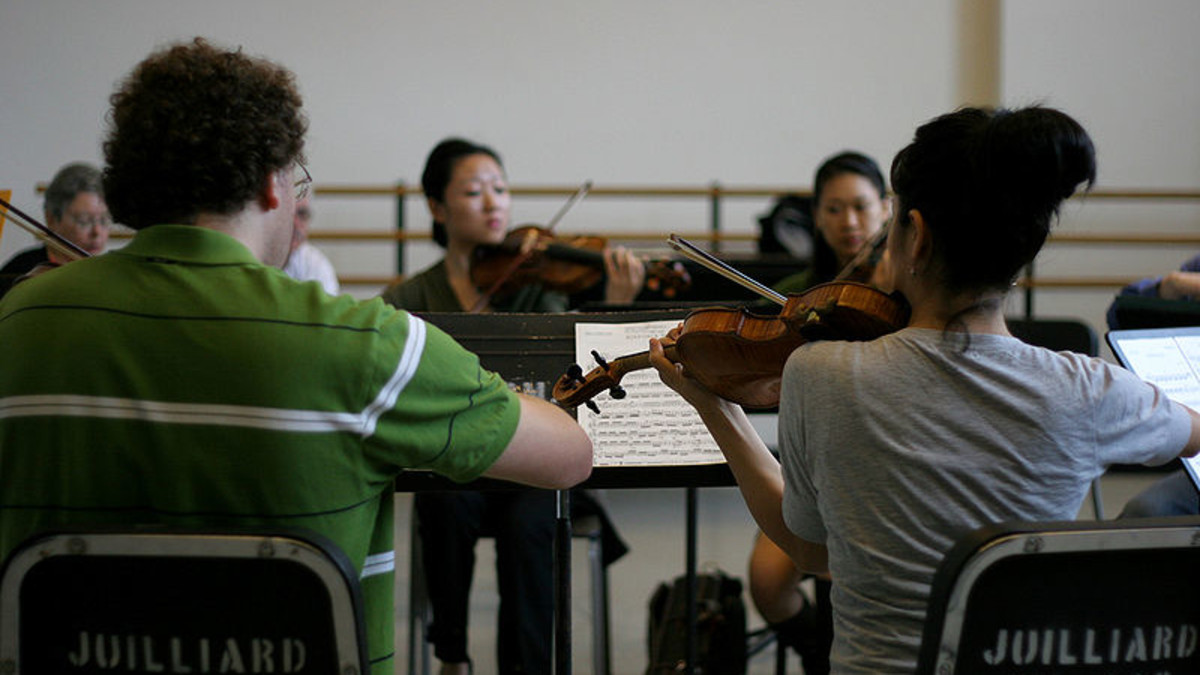
Flexibility and Interdisciplinary Opportunities
Double Major and Minor Options for BA Students
This is the BA's single greatest strength. A BA allows for easy double majoring in non-music fields, leading to highly valuable combinations like Music + Marketing, Music + Pre-Law, or Music + Data Science. This flexibility can be critical in today's shifting job market.
Specialized Tracks Within BM Programs
While less flexible, the BM offers specialization through degree tracks:
Composition, Performance, Music Technology Paths
The BM is not just for performers; it offers highly focused degrees in:
- BM in Composition: Intensive study in classical or electronic composition.
- BM in Music Education: Leads to teacher certification.
- BM in Music Technology: Combines performance with specialized audio engineering skills.
Student Experience and Campus Life
Day-to-Day Academic Life in BM vs BA Programs
A BM student's life is intensely scheduled around practice and ensemble rehearsals. A BA student's life is more balanced, with time dedicated to non-music courses and other student activities.
Student Support Services and Community
Conservatories (BM) offer specialized career counseling focused solely on the music industry. Universities (BA) offer broader career services, but often require the student to seek out music-specific alumni and opportunities.
Internships, Ensembles, and Performance Opportunities
BM students have mandatory principal ensembles; BA students have optional ensembles. Both offer performance opportunities, but the BM standard of performance is usually higher due to the program's focus. BA students may have greater access to general internships outside the arts (e.g., finance internships).
Frequently Asked Questions (FAQ) abour BM vs BA in Music
1. What are the main academic differences between a BM and a BA in music?
The BM is a professional degree (65-80% music coursework) focused on performance/technique. The BA is a liberal arts degree (30-40% music coursework) focused on academic breadth, theory, and allows for double majors.
2. Which degree (BM or BA) is better for a career as a professional performer?
The Bachelor of Music (BM) is the standard professional credential for performers, composers, and K-12 educators.
3. How does the cost of a BM program compare to a BA in music?
BM programs often have a higher final cost due to mandatory private lesson fees and specialized studio costs, even if the base tuition is the same as a BA program.
4. What are the top universities that offer a BM in music?
Leading institutions include Juilliard, Curtis, Eastman, and Indiana University Jacobs School of Music. Admission relies heavily on your audition.
5. Which schools are known for strong BA in music programs?
Prominent universities with strong liberal arts programs and excellent BA options include Stanford, Yale, and UC Berkeley, where interdisciplinary study is valued.
6. What are the typical admission requirements for BM versus BA music degrees?
BM requires a mandatory, successful audition and usually a composition portfolio. BA requires a standard academic application (GPA, test scores) with the audition being optional or advisory.
7. Can I double major or minor in another subject with a BM or BA in music?
It is nearly impossible to double major with a BM due to its credit load. It is common and often encouraged with a BA.
8. What scholarships are available specifically for BM or BA music students?
BM students primarily receive merit-based talent scholarships based on audition. BA students rely more on general academic merit and need-based financial aid.
9. What are the average starting salaries for BM and BA music graduates?
Starting salaries vary widely. BA graduates who double-major in a high-demand field (like tech or business) often have higher initial stability, while BM graduates in principal orchestra roles or academia earn higher long-term salaries.
10. How do graduation rates differ between BM and BA music programs?
Graduation rates don't differ significantly by degree type, but the *time-to-completion* can be longer for BM students if they struggle with the intense practice and performance requirements.
11. Are there notable alumni who graduated with a BM versus a BA in music?
BM alumni are typically famous performers (e.g., Yo-Yo Ma, Wynton Marsalis). BA alumni often thrive in interdisciplinary fields (e.g., CEOs with music administration backgrounds, music producers, or famous composers for film/TV who pursued a BA).
12. What student support services (internships, ensembles, career counseling) are offered in BM and BA programs?
BM programs offer specialized performance and music career counseling. BA programs offer broader university career services and greater flexibility for non-music internships.

About the Author: Sayak Moulic
SEO & Growth Strategist
Sayak builds content experiences at Orbit that help our students learn about college application and financial literacy.
Topic Tags

(App admin)
December 27, 2025
An experienced writer and researcher focused on college admissions, this author simplifies the complex journey of applying to universities. They create practical, student-friendly content on entrance exams, application strategies, essays, and admission planning. With a strong emphasis on clarity and real-world guidance, their work helps students and parents make informed decisions, avoid common mistakes, and confidently navigate competitive admissions processes to find the right academic fit.






.jpg)